Commercial solar specialists · UK

Turn unused commercial roof space into lower energy costs

Solar Britain helps UK businesses explore commercial solar systems designed to reduce electricity bills, improve cashflow and unlock long-term value from unused roof space.

For warehouses, factories, supermarkets, logistics sites, industrial buildings and commercial property owners.

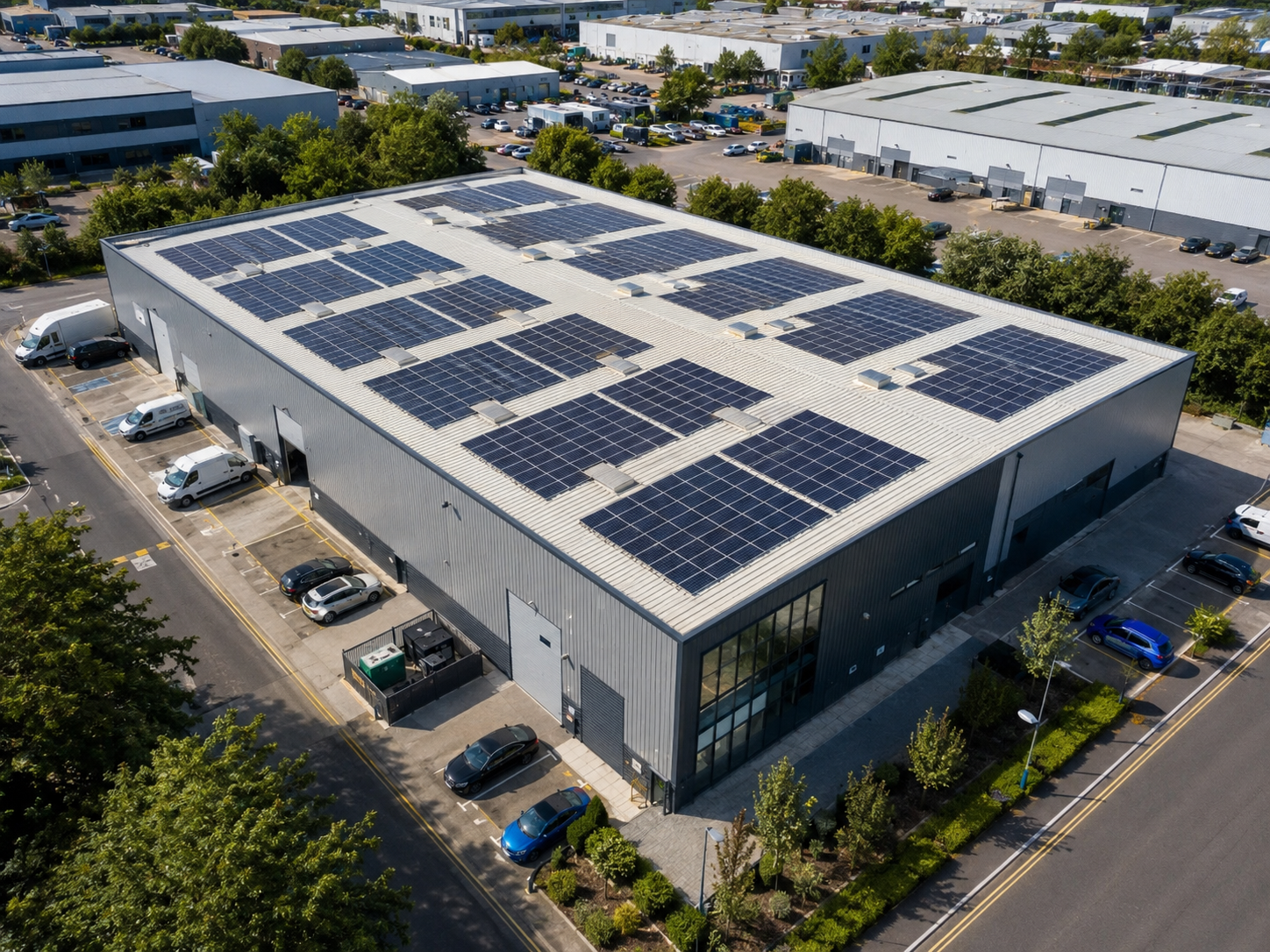
Commercial solar panels installed on a UK distribution warehouse roof — 450 kWp rooftop PV system across ~2,500 m² of trapezoidal metal cladding
Rows of commercial solar panels on a UK manufacturing factory rooftop at sunset — 620 kWp industrial PV array on standing-seam roof
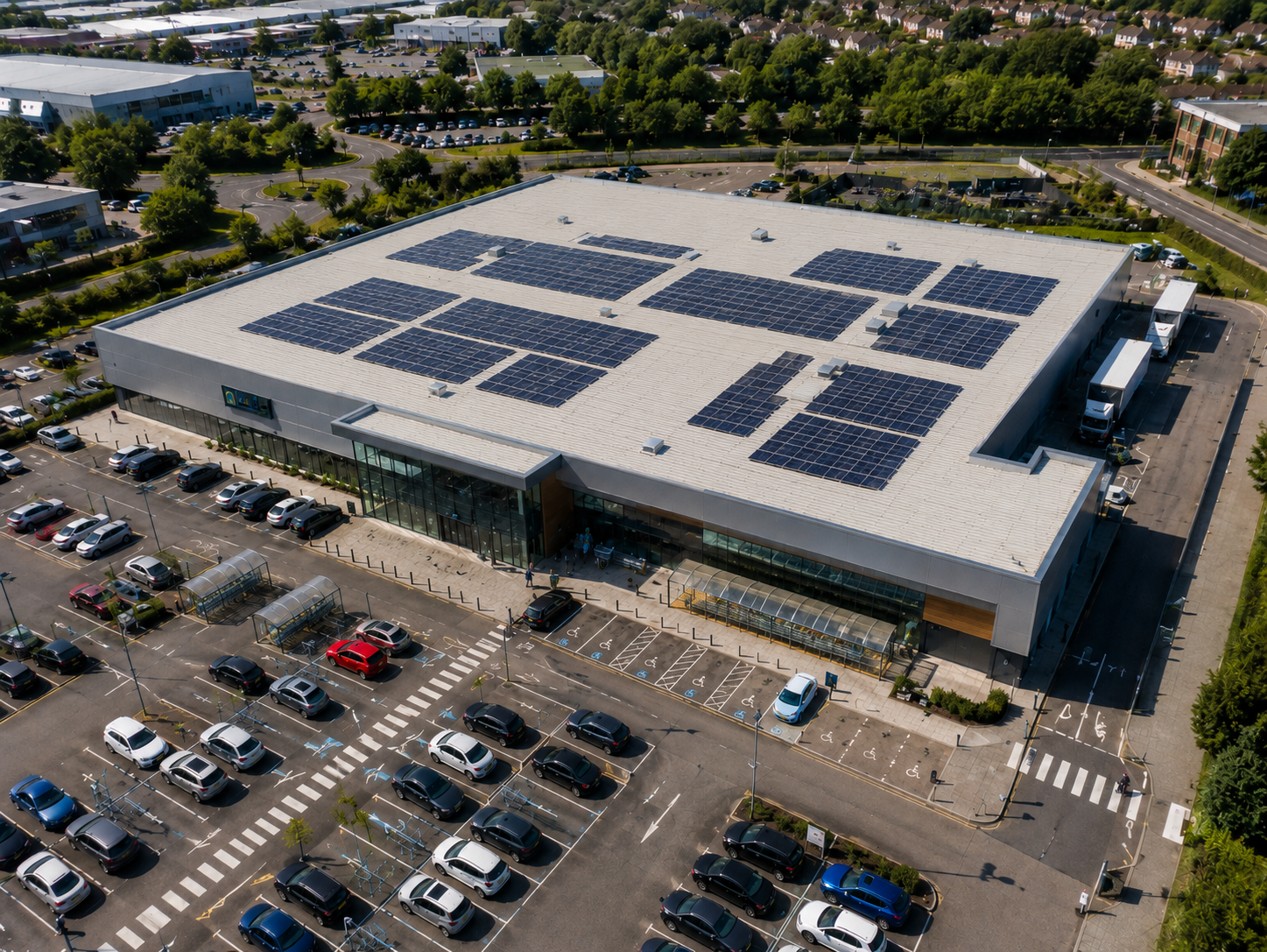
Solar panels on a UK supermarket rooftop — 180 kWp commercial PV installation on a retail flat roof
Rooftop solar panels on a UK cold storage and food distribution warehouse — 780 kWp commercial PV array offsetting refrigeration load
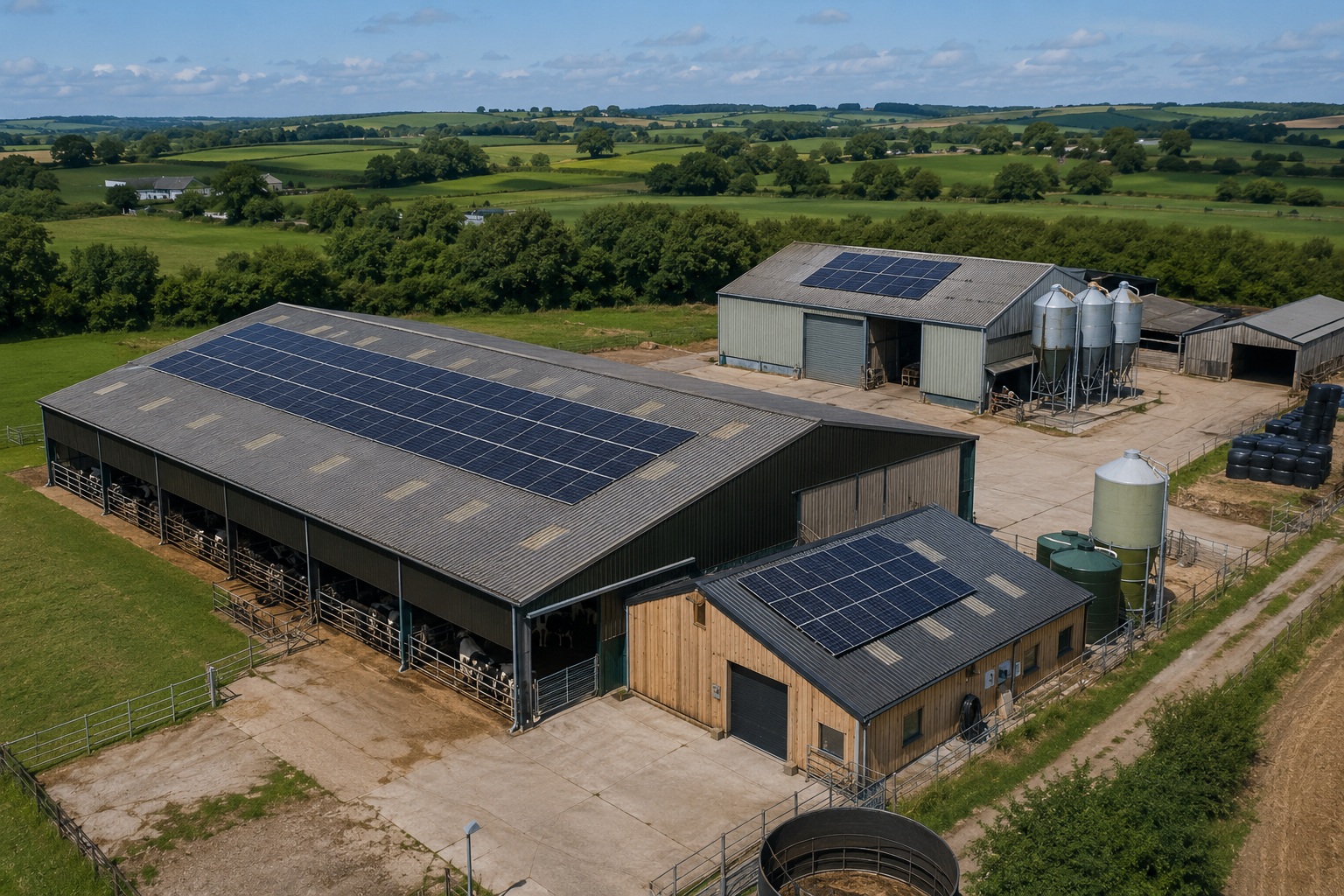
Commercial solar panels on UK agricultural barn and grain processing buildings — 250 kWp farm rooftop PV system
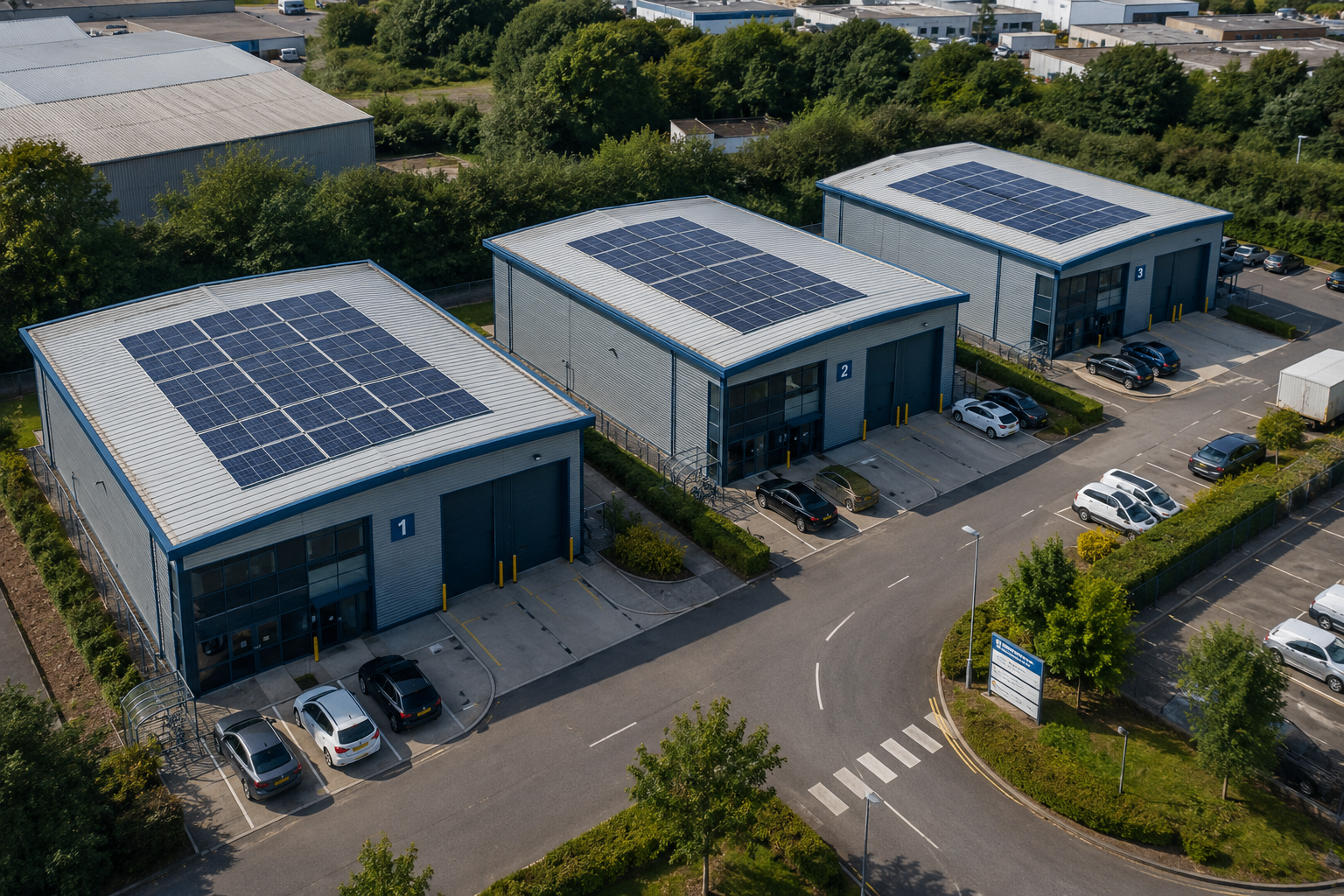
Solar panels installed across multiple unit rooftops on a UK multi-let commercial estate — 340 kWp landlord PV portfolio
Slide 1 of 6: Warehouses & Logistics

Commercial solar in the UK — the short version

  • Typical UK commercial solar cuts grid electricity bills by 40–70% for sites with strong daytime demand (Solar Britain feasibility data, 2025).
  • Payback for well-sited rooftop systems is usually 4–7 years, with panels warrantied for 25–30 years of generation.
  • Full Expensing (HMRC, in force 2026) lets qualifying businesses deduct 100% of qualifying solar plant costs from taxable profits in year one.
  • £0-upfront routes exist: solar PPAs, operating leases and asset finance can make suitable sites cashflow-positive from day one.
  • Planning permission is usually not required for rooftop PV on commercial buildings under permitted development, subject to size and location.
  • Commercial solar specialists
  • Finance options available
  • Planner-led proposals
  • Built for UK businesses
  • Suitable sites may be cashflow-positive from day one
Quick quote

Get an instant solar estimate

Adjust the sliders to see live indicative numbers for your site. Based on UK averages — refine on the full calculator for a detailed view.

Tip: a small office ≈ 100–300 m². Tennis court ≈ 260 m². Warehouse ≈ 2,000–8,000 m².

kWh

Small shop/office ≈ 10,000–25,000 kWh/yr. 20-person office ≈ 40,000 kWh/yr. Mid factory ≈ 500,000 kWh/yr.

UK commercial average ≈ 25.5 p/kWh.

No

We'll send your figures here — no spam.

PDF, JPG, PNG or HEIC. Max 10 MB. Sharing your bill helps us tailor your savings estimate.

Your indicative numbers

Solar analysis

System size

Hidden until submitted

Annual generation

Hidden until submitted

Panel count

Hidden until submitted

Annual saving

Hidden until submitted

Payback

Hidden until submitted

Indicative cost

Hidden until submitted

Monthly finance

Hidden until submitted

0–8% APR, 10 yr

25-year saving estimate

Hidden until submitted

Based on today's tariff, before inflation and degradation.

Enter your details on the left to reveal your figures. You can keep tweaking the inputs afterwards.

The opportunity

Your roof could be doing more for your business

Many UK businesses are paying high electricity costs while thousands of square metres of commercial roof space sit unused. Solar gives suitable businesses a way to generate power on-site, reduce reliance on the grid and create a stronger long-term energy position.

High energy bills

Volatile wholesale prices continue to put pressure on operational budgets and long-term planning.

Unused roof space

Thousands of square metres of commercial roof space across the UK currently generate no value for the business below.

Limited cashflow flexibility

Many businesses can't release capital easily — yet still need to reduce energy risk and exposure.

The Solar Britain approach

Commercial solar designed around savings, finance and long-term value

Solar Britain helps you assess whether commercial solar is suitable for your site, estimate potential savings and move from initial interest to a detailed proposal and funding review.

Reduce electricity bills

Generate power on-site and lower your reliance on volatile grid pricing.

Use more of your own generated power

Operations with strong daytime usage typically self-consume the majority of what they produce.

Export surplus where suitable

Sell surplus electricity back to the grid where export capacity and tariffs allow.

Explore funded solar options

Asset finance, PPAs and lease structures can spread or remove upfront capital cost.

Improve ESG and carbon reporting

Strengthen sustainability credentials with measurable on-site renewable generation.

Create long-term commercial value

Turn unused roof space into a productive, long-life energy asset.

How it works

From calculator to commissioned system in five clear steps

1

Calculate your savings

Use the free calculator to get an indicative picture of system size, savings and finance.

2

Qualifying conversation

A short call about your site, energy use and commercial goals to confirm suitability.

3

Finance review

Confirm the funding route — self-funded, asset finance, PPA or lease — before any survey or design work begins.

4

Survey, design & proposal

Desktop and site survey, bespoke system design and a detailed commercial proposal matched to your roof and usage.

5

Install, generate and monitor

Planned around your operations, with monitoring and maintenance options.

Commercial rooftop solar panels on a UK factory at sunset — large-scale industrial PV installation across a manufacturing roof
Finance-led

Commercial solar does not always need upfront capital

On suitable sites, funded solar systems may be structured so energy savings and generated income help support the finance costs. This can allow some businesses to become cashflow-positive from day one, subject to site suitability and finance approval.

Case studies

What a typical commercial proposal looks like

Example format — full case studies coming soon.

View all examples →
Example format

Logistics

System
420 kWp
Generation
357,000 kWh
Saving
£62,500 p.a.
Finance
Asset finance
Payback
5.8 yrs
View case study →
Example format

Cold storage

System
680 kWp
Generation
578,000 kWh
Saving
£118,000 p.a.
Finance
PPA
Payback
Day-one cashflow*
View case study →
Example format

Manufacturing

System
310 kWp
Generation
263,500 kWh
Saving
£48,200 p.a.
Finance
Self-funded
Payback
5.2 yrs
View case study →

* On suitable sites, with the right energy usage profile and funding structure, commercial solar can be cashflow-positive from day one.

Built on proper checks

A proper commercial solar proposal needs more than a quick quote

Roof suitability checks

Structural, surface and access assessment before any system is specified.

Planning considerations

Where required, planning and permitted development positions are reviewed.

DNO / grid connection review

G99 applications, export capacity and connection conditions checked early.

Finance review

Lender eligibility, structure and headroom reviewed alongside the technical proposal.

Warranty information

Clear panel, inverter, performance and workmanship warranty positions.

Monitoring and maintenance

Optional remote monitoring and planned maintenance to protect long-term performance.

Why Solar Britain

An honest answer to the objections businesses tell us they hear

Commercial solar has a credibility problem — inflated payback claims, unclear quotes and pressure selling. Here's how we work instead. No savings figures until we've seen your site.

"Solar doesn't really work in the UK climate."

Typical sales approach

Headline yields quoted from best-case southern sites, or vague "up to" figures with no location adjustment.

Solar Britain approach

We model generation for your postcode using MCS irradiance data and your actual roof orientation, pitch and shading — so the yield in your proposal reflects your site, not a brochure average.

"Payback claims sound too good to be true."

Typical sales approach

Bold "3-year payback" promises based on peak import tariffs, 100% self-consumption and no maintenance cost.

Solar Britain approach

We publish a realistic 4–7 year range and show the assumptions behind it: your tariff, self-consumption %, export price and O&M cost. If your site doesn't stack up, we tell you.

"The install will disrupt our operations."

Typical sales approach

One-size install plan with no discussion of live operations, shutdowns or health & safety on your site.

Solar Britain approach

Phased installs planned around your production calendar, with a written method statement, RAMS and a single site contact. Most rooftop installs need zero downtime.

"Our roof probably can't take the weight."

Typical sales approach

Panels quoted before any structural review; "we'll sort that later."

Solar Britain approach

A structural roof survey is a prerequisite — not an afterthought. If the roof can't take standard ballast or fixings, you'll hear it before you're asked to sign anything.

"We'll end up locked into expensive maintenance contracts."

Typical sales approach

Bundled multi-year O&M priced into the deal with limited transparency on what's covered.

Solar Britain approach

O&M is optional and priced separately. You see the scope, the response times and the exit terms up-front, and you're free to appoint another provider.

"Every quote we get is wildly different."

Typical sales approach

Non-comparable proposals with different panel specs, different assumptions and hidden exclusions.

Solar Britain approach

One consistent modelling framework: same yield method, same tariff logic, same warranty positions. When you compare us to another quote, it's clear where the difference comes from.

"What happens after year 10?"

Typical sales approach

Silence on degradation, inverter replacement and end-of-life.

Solar Britain approach

Panel performance warranties, inverter replacement expectations and recycling routes are all set out in the proposal. Nothing hidden until year 11.

The right answer for your business might be to install now, to phase the project, or not to install at all. A feasibility review tells you which — with no obligation.

Ready to see whether your roof could reduce your energy bills?

Take the first step with a free indicative calculation or speak to the team about a full feasibility review.